The Environmental Cost of Sacramento’s Homelessness Crisis
Where are the environmentalists?Where are the climate change activists?Where is CA Governor Gavin Newsom?

Where are the environmentalists?Where are the climate change activists?Where is CA Governor Gavin Newsom?

America’s homelessness crisis is routinely framed as a housing crisis. It is not. It is a crisis born from the collapse of accountability at every level of the system. Nowhere are the consequences of that collapse more visible than in California — and especially in its capital city, Sacramento. In 2016, California became the only state in the nation to formally adopt the federal government’s Housing First mandate as its sole taxpayer-funded approach to homelessness, directing billions in state and federal dollars toward subsidized-for-life apartments with no accountability for sobriety, treatment, or work — ever. Sacramento County followed in 2017, embracing the housing-only model, despite repeated warnings from frontline providers that housing alone would never adequately address the addiction, mental Read More ›

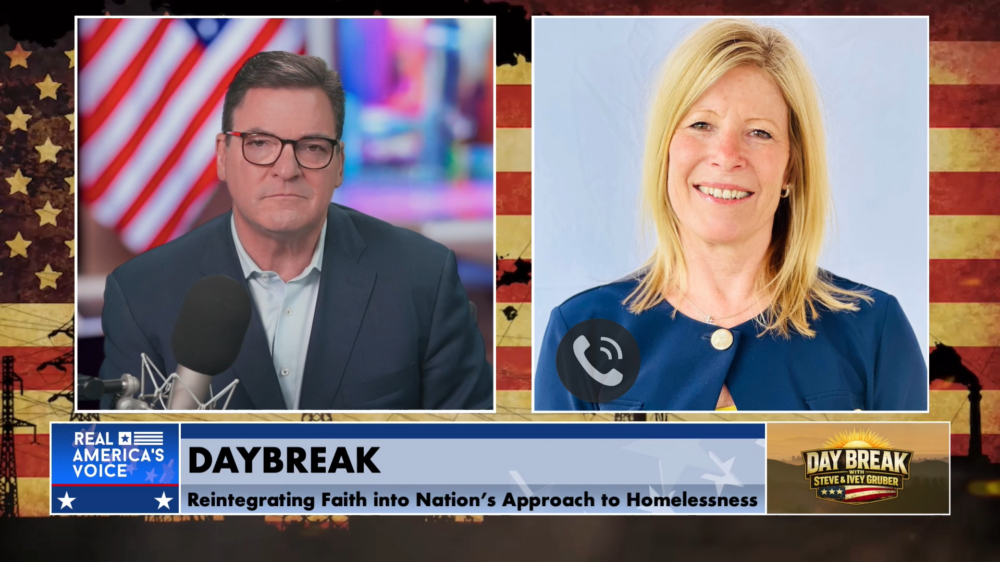
Michele Steeb appeared on The Steve Gruber Show on May 5 to discuss our current homelessness crisis. She explained why Housing First has failed to address the crisis, why the crisis is especially bad in California, the bill that could have begun to turn things around, but that Governor Gavin Newsom vetoed, and more.

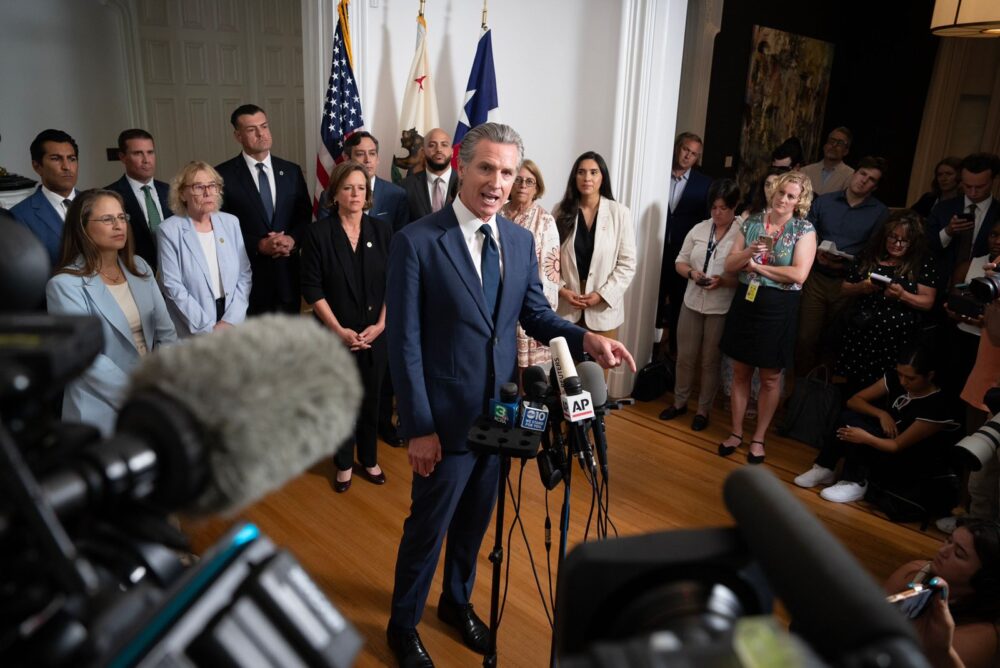
Gavin Newsom stood before the cameras in early March and once again blamed local governments for the state’s spiraling homelessness crisis. “No more excuses,” he thundered, threatening to strip funding from counties he claims are underperforming while promising to redirect “every damn penny” to those “getting things done.” Newsom is once again attempting to shift blame for California’s homelessness crisis — the very crisis he has repeatedly pledged to solve, including his 2021 vow to end family homelessness within five years. Since 2017, homelessness in California has surged by more than 40 percent — from roughly 134,000 people to nearly 187,000 in 2024 — despite an estimated $30 billion in spending he authorized. His latest tirade against counties ignores the Read More ›

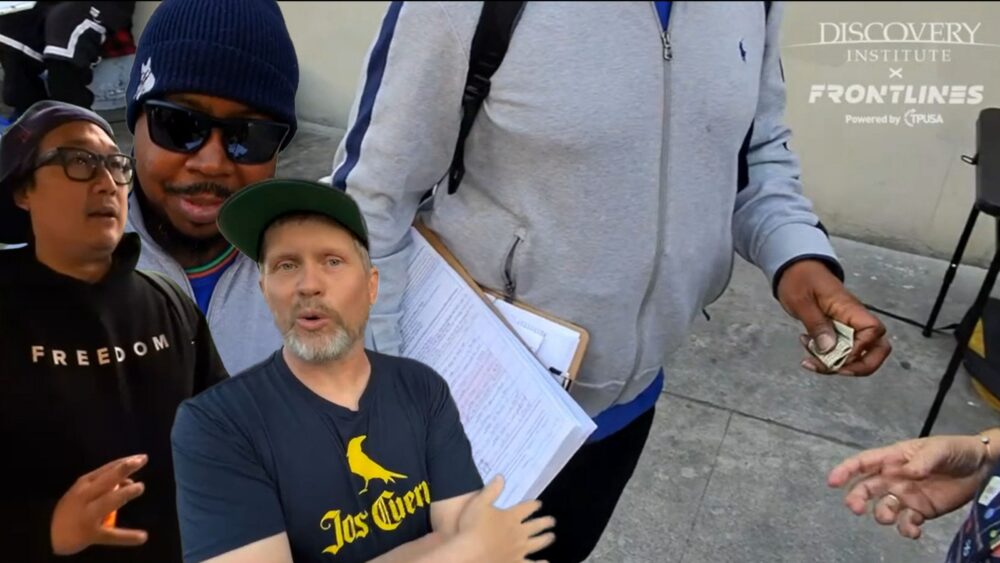
Discovery Institute has joined up with Frontlines Turning Point USA, O’Keefe Media Group, and other independent journalists in a multi-part investigation into a cash-for-ballots scheme in Los Angeles’ Skid Row. Jonathan Choe and Kevin Dahlgren help expose the exploitation of the homeless, the theft of the identities of innocent Americans, and the violation of state law in some of America’s most crime-ridden streets. Skid Row in downtown Los Angeles is one of the most dangerous neighborhoods in America, a human dumping ground infested with crime, open-air drug use, and unimaginable suffering on virtually every block. “This is hell on Earth,” I commented at one point. This chaos is also what allows alleged fraudsters to blend in and prey on the Read More ›

California Governor Gavin Newsom regularly repeats his mantra: “Shelter solves sleep; housing solves homelessness.” Hmm. From 2022 to 2025, I wrote weekly columns about homelessness and gained insight by living for three weeks in shelters. Based on that I can say: In general, it is not true that housing solves homelessness.
Maybe it solves homelessness for people who are not addicts, alcoholics, mentally ill, or victims of abusive childhoods, but most homeless people are in one or more of those four categories. Maybe housing solves homelessness if the rest of us don’t like to see homeless people: Get them out of sight and they can be out of mind.
Invisibility benefits those who have homes. Unseen homeless folks don’t ask us for money, so we are free from giving what often goes to buy drugs or alcohol, or from not giving and feeling heartless. But for those who are out of their minds for various reasons, housing does not solve homelessness.
Augustine 1,600 years ago famously said regarding God, “Our hearts are restless until they rest in you.” The earthbound equivalent is “Our bodies are restless until they reside in a home.” For many, though, walls and a roof alone do not make a home.
Instead, hiding away addicts or alcoholics inside an apartment leaves many apart from everything except a needle or a bottle. Hiding away the severely mentally ill leaves them apart from everything except walking nightmares. People who are desperately ill need to be together with someone who can offer compassionate help.
That’s one reason a chart used at the Orange County Rescue Mission (OCRM) in Tustin, California, impressed me. It’s one of the places I lived at for a few days in 2023 and in January 2026 to gain some street-level understanding of these issues. Instead of using one marker to assess progress in coming out of homelessness—a signed apartment lease, say—OCRM evaluates a more holistic list of ten, including: “spiritual … sobriety/substance abuse (if applicable) … mental health … shelter/housing … social/family relationships … income and employment … physical health, food, and nutrition.” (This quotation and those that follow are from the OCRM “Outcome Assessments,” and I’ve seen that actions back up those words.)
Read More ›

Homelessness in California — and across America — has reached a breaking point. The crisis has climbed to the highest level ever recorded, even as billions more are poured into housing subsidies and bureaucratic programs that promise compassion but deliver only despair. No one bears the consequences more cruelly than the homeless themselves. Their death rate has soared by 77% in the country’s largest urban areas, a devastating indictment of a system that prioritizes housing units over human healing. Communities, too, shoulder the burden — streets overrun, neighborhoods destabilized and taxpayers funding a model that fails everyone it claims to help. President Donald Trump’s recent executive order marks the first real course correction in over a decade. By directing federal Read More ›

In a catastrophic miscalculation that exposes his continued attachment to failure, California Gov. Gavin Newsom vetoed Assembly Bill 255 on Oct. 1. It was a bipartisan measure designed to expand access to recovery housing for homeless individuals struggling with substance use disorders. His veto comes at a time when California’s homeless can least afford more failure. AB 255, authored by Assembly member Matt Haney, would have allowed up to 10% of state homelessness funds to support abstinence-based recovery housing. These programs integrate shelter with sobriety requirements, accountability and supportive services that help people reclaim stability. Newsom dismissed the bill as “unnecessary,” insisting that current guidelines already permit sober housing and warning against “duplicative” categories. His reasoning rings hollow. California mimicked Read More ›

Standing on an Oakland street flanked by legislative allies, California Gov. Gavin Newsom made a sweeping promise in 2021: California would eliminate family homelessness within five years. Backed by an unprecedented $75 billion budget surplus and $27 billion in federal stimulus, his administration committed $12 billion to the crisis, including $3.5 billion for housing units and rental subsidies. His strategy? Double down on Housing First—a one-size-fits-all policy California adopted in 2016 after the federal government’s 2013 embrace of it. Housing First promises permanent, taxpayer-funded housing with no expectations—no sobriety, no treatment, no work, ever. Somehow, the governor missed the glaring reality that under Housing First, homelessness in California exploded by 34%, and unsheltered homelessness by 47% between 2017-2021. Fast forward Read More ›