Fix Homelessness How to rebuild human lives
Topic

Harm Reduction

Screenshot-2026-05-14-150355

HUGE WIN: Seattle Public Library Cancels Harm Reduction Workshops After Public Exposure

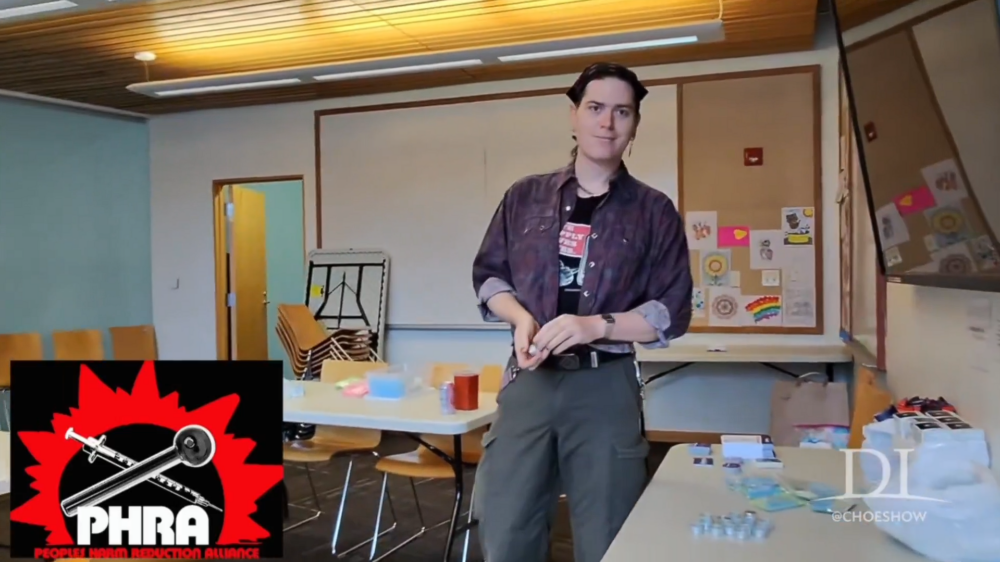
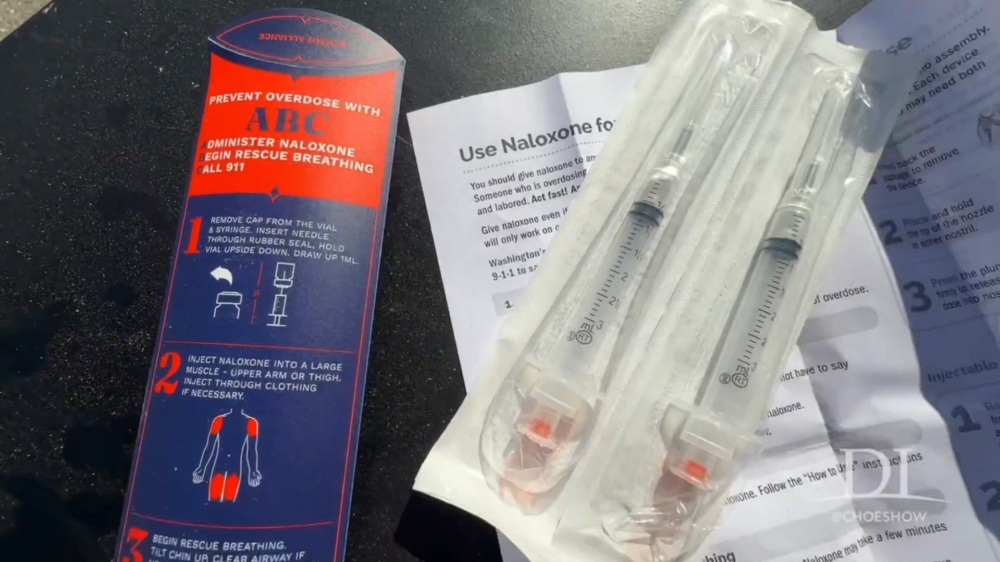
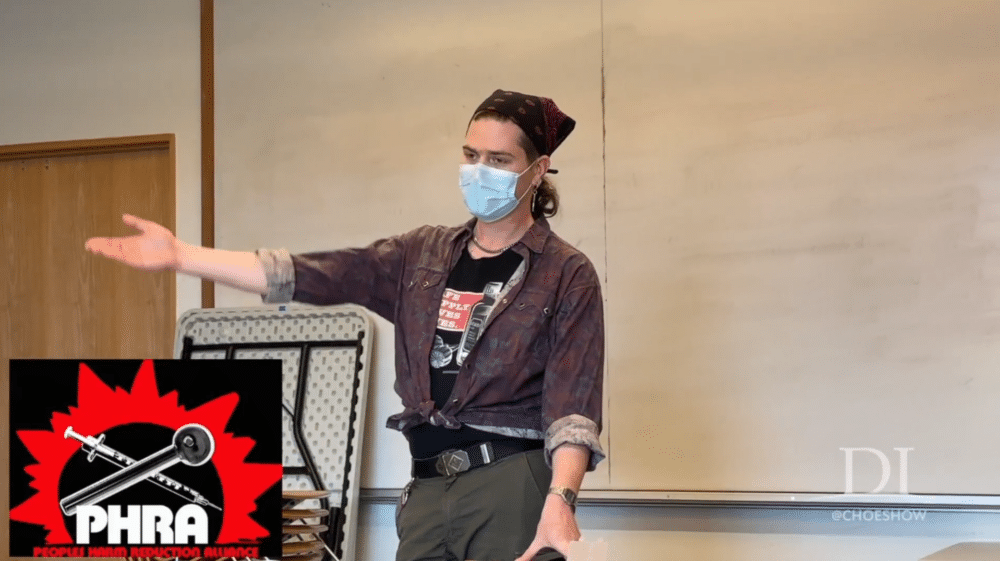
Canceled The Seattle Public Library says there will be no more People’s Harm Reduction Alliance workshops at local branches this year. This news comes after staff with the controversial harm reduction provider got triggered by my video recording, and abruptly canceled the drug paraphernalia workshop. SPL is also responding to some of my questions about FREE Narcan needle kits being given out at the counter with easy access to kids. SPL History SPL says it has provided information about overdose prevention and resources, such as nasal naloxone, since April 2025. Naloxone Seattle & King County Public Health added intramuscular naloxone in January of this year because it is apparently cheaper than the nasal spray. Concerns About Needles An SPL spokesperson Read More ›

Screenshot-2026-05-07-140952

People’s Harm Reduction Alliance Brags About Their “Crack Kits”

Harm Reduction Isn’t Cool The People’s Harm Reduction Alliance calls harm reduction supplies “crack kits.” It includes condoms and drug pipes. ZERO push by this taxpayer funded organization for treatment and recovery. PHRA is being allowed to present “how to use” trainings at the Seattle Public Library.

Screenshot-2026-05-06-105335

Seattle Public Library Holds Harm Reduction Courses

Exclusive The Seattle Public Library is now allowing the controversial People’s Harm Reduction Alliance to hold classes on how to properly use drug paraphernalia. The Capitol Hill library branch is also giving away free Narcan at the front desk in the form of needle kits with ZERO training and easy access to minors. Tuesday afternoon, the taxpayer funded PHRA staff got triggered and canceled an information session after they saw me recording. What are they trying to hide? Future Planned Events There are more PHRA trainings planned at the Seattle Public Library. Who’s overseeing this taxpayer funded program? Tax Levy The Seattle Public Library is also begging voters to help pass a $480 million dollar tax levy. Seattle Mayor Katie Read More ›

Seattle-Bailey-BoushayHouse01
Image by Joe Mabel at Wikimedia Commons: https://commons.wikimedia.org/wiki/File:Seattle_-_Bailey-Boushay_House_01.jpg

Madison Valley Homeless Shelter Brings Crime and Disorder to Neighborhood

Wendy Yim is an aspiring writer, and by all measures a good one. Her first novel attracted the attention of literary agents and she was working on a second when she was forced to pivot to much less rewarding work: defending her neighborhood against the dangers posed by a low-barrier homeless shelter. Wendy’s family lives in Seattle’s picturesque, middle-class Madison Valley neighborhood, situated just east of Capitol Hill — a place filled with eclectic and colorful homes, winding streets lined with trees, and yards landscaped with flowers. Through the middle runs East Madison Street, host to about twenty small businesses, including a flower shop, bakery, music school, several ethnic restaurants, a small supermarket, and a massage clinic. Children make up Read More ›

Katie-Wilson-Starbucks-homelessness-support

Seattle Mayor Announces Big Business Partnerships to Fund Same Failed Homelessness Policies

Starbucks: From Foe to Friend Last year Seattle Mayor Katie Wilson blasted Starbucks while standing in solidarity with workers on strike. This week, she announced the local coffee giant would help fund the first phase of the city’s homelessness response. So is the mayor now pandering to Starbucks or is Starbucks pandering to the mayor? Either way, we all know how the last public-private partnership to end homelessness turned out for local donors and the government. Past Failed Attempts Remember We Are In? The King County Regional Homelessness Authority under former CEO Marc Dones got corporations like the Gates Foundation to pony up millions of dollars to solve homelessness. Amazon, Microsoft, Ballmer Group, and the Raikes Foundation were also involved. Read More ›

LIH-director-answers-questions

Tiny Home Village Director Dodges Question About Smoking Shacks on Premises

Exposed We Heart Seattle just exposed fentanyl smoking shacks inside taxpayer funded Low Income Housing Institute’s tiny house villages. But I was chasing this tip as well. Recently, I point-blank asked LIHI Executive Director Sharon Lee about these controversial “safe consumption” sites on her properties. Instead of giving me a yes or no answer, listen to what she had to say.

3e217315-7fe8-4097-9c52-eb89b4ab6b4c4284x4495-Kevin-Dahlgre

Homeless, Incorporated

After decades of working inside homelessness services, I’ve learned that the greatest lie we tell ourselves is that we don’t know what works. We do. The problem isn’t a lack of data, innovation, or funding. The problem is that real solutions require decisions we are unwilling to make and truths we are afraid to say out loud.

It is easier to expand systems than to fix them. Easier to signal compassion than to practice it in ways that are uncomfortable. Easier to manage homelessness than to end it.

Most people assume homelessness persists because it is too complex to solve. In reality, it persists because solving it would disrupt an entire industry built around its permanence. Over time, the system stopped being accountable to outcomes and became accountable to itself. Programs are judged by how many people they touch, not how many people leave the streets. Success is defined by engagement, not transformation. In this environment, homelessness is no longer a crisis to be resolved, but a condition to be administered.

My brother Jason, who is formerly homeless, giving hope to current homeless

One of the hardest truths is that housing alone does not stabilize people who are deeply addicted, severely mentally ill, or both. I have watched housing placements fail because we insisted on treating housing as the solution rather than the setting in which recovery might occur. For people actively using fentanyl, methamphetamine, or alcohol at life-threatening levels, housing without treatment can become a slower form of self-destruction. When it collapses, we try again and call it trauma-informed care, quietly accepting failure as inevitable.

Real solutions begin with recovery, not as a moral requirement, but as a practical one. A person cannot stabilize while in the grip of serious addiction. No amount of case management, harm-reduction supplies, or wellness check-ins can substitute for sobriety when the brain itself is hijacked. Cities like Portland and Seattle know this, yet continue to build models that treat recovery as optional. We call this compassion, but too often it looks like abandonment.

Read More ›
homeless-man-outside-Plymouth-Housing-building

Drug Activity Flourishes Around Plymouth Housing Stewart Street Location

Harm Reduction In Action Plymouth Housing continues to be a blight on the downtown Seattle community. Look at all the drug action in front of the Stewart Street location. This is “Housing First” and “Harm Reduction” in action. Staff give out free drug supplies and no one is required to go into detox or find jobs. So they hang out all day in their apartments and do fentanyl. In some cases, dealers actually live in the units. It’s one stop shopping and a death trap. If any of these so called “permanent supportive” apartments are pitched for your community, fight like heck to keep it out. Unless you like to live next to crime, chaos, and death everyday. 911 calls Read More ›

downtown-seattle-skyline-on-a-dark-cloudy-day-stockpack-adob-242932522-stockpack-adobestock
Downtown Seattle skyline on a dark cloudy day
Image Credit: Sean - Adobe Stock

“Humanitarian Emergency”: Seattle’s New Mayor Must Bring an End to the City’s Homelessness Crisis

Seattle’s incoming mayor, Katie Wilson, will inherit a homelessness crisis that will define her ability to lead. Seattle’s homeless population needs more than another round of aspirational promises. They need and deserve an operational reset grounded in compassion, accountability, and the courage to confront realities the city has failed to address for years. She must replace press releases and ceremonial groundbreaking for housing that may never materialize with programs that support the homeless in reclaiming their lives from the grip of untreated mental illness, addiction, and dangerous encampments that have taken root throughout the city. The scale of Seattle’s crisis is staggering. HUD’s 2024 Point-in-Time count identified 16,868 people struggling with homelessness in King County — 7,058 sheltered and 9,810 Read More ›

Screenshot-2025-12-01-123909

Small Businesses Struggle, Black Market of Stolen Goods Thrives in Seattle’s Chinatown

“We Call Every Week, But They Just Keep Ignoring” Christmas shopping is underway in downtown Seattle. But if you are looking for a good deal on stolen items, head to Chinatown-ID. Late Saturday evening, 12th Ave & Jackson St remains a total train wreck. Drug addicts are passed out in vestibules, the mentally ill are flailing in the streets, and cops are driving by without enforcing the law. The vast majority of the people admit they are not homeless. They are here to score drugs. Outgoing Mayor Bruce Harrell has failed this Asian American community after pushing “Housing First” and “harm reduction” policies that are not working. He allowed this neighborhood to turn into a containment zone and human dumping Read More ›