Report To Reveal Infiltration of Homelessness Movement
- Categories
- Homelessness
***UPDATE 10/9/2025*** Capital Research Center’s report, “Infiltrated: The Ideological Capture of Homelessness Advocacy,” is out now!
You see a man in a shop doorway shooting up. A block away a man outside a tent bends over in the “dope fiend lean” that supposedly intensifies a “hit.” A woman is in the middle of the street nearby, swaying to and fro and shouting in distress at unseen ghosts. But there is also a rally forming two blocks north, in front of the courthouse, where black-clad, masked youth might again set a dumpster or two on fire to mark their righteous protest against one thing or another.
What is going on? Seattle is not a war zone, it is true, nor is Portland or Los Angeles or Chicago. Mostly, life is peaceful, even thriving. But there are also some very edgy areas where law enforcement doesn’t seem deeply engaged, where tourists are shocked by what they witness, and that suburbanites shun. Crime is high in those blighted areas (shoplifting, car prowls, knife fights, shootings), stores are still boarded up and the manifest human suffering tugs at the consciences of passersby.
Homelessness. Long ago, in 1982, derelicts in Washington, D.C., were reported hanging out on subway steam grates to keep warm, and liberals back then wanted to blame their plight on budget cuts ordered by the new Reagan Administration. But the cuts hadn’t even taken effect and had nothing to do with the pitiable people who even casual examination showed signs of mental illness and drug or alcohol addiction.
Today, with far more homelessness in a number of American cities, the conventional wisdom on the left and in the media is that lack of housing is the problem. Confident that huge grants for new housing, under the banner of “Housing First,” would turn the problem around, President Obama pledged in 2013 that homelessness would end in a decade. Well, homelessness has grown progressively worse since then. As the great Herman Kahn, founder of Hudson Institute, said, there are some ideas so ridiculous that only a person with a doctorate would believe them. “Housing First” is one of them.
But at least “Housing First” is a policy with which one can joust, and that is what Discovery Institute did when we started our Fix Homelessness initiative five years ago. We noted that government and well-meaning foundations were pouring scores of billions of dollars into housing that either didn’t materialize or was wantonly costly and, while it may have helped a few, created incentives for more homelessness, not less. Then another buzz-phrase, “harm reduction,” became vogue — the idea that drug addicts are going to do drugs regardless of efforts at intervention, so the best one can do is supply them with clean needles and pipes to keep them “safe.” Effectively, we have argued, this is a wasteful admission of defeat. But, again, at least it is a policy with which one can contend.
We organized a great team, initially headed by Christopher Rufo and then taken over by Robert Marbut, Caitlyn McKenney, and Jonathan Choe, among others. Our president, Steve Buri and I have taken more than an ordinary administrative role in the project. We don’t seek or take government money and we have many small- and medium-sized donors, but few foundation grants. We are free to tell the truth as we discover it. We initially looked forward to a robust and civil public policy debate.
But we started seeing some seamy side-truths early on. Chris Rufo pointed out the hidden costs of homelessness: not only were people dying in the streets, but they were also overwhelming hospital emergency rooms and populating jails not suited to treatment in most cases. Also, the late Eleanor Owen, who founded an early homelessness program in Seattle a half century ago, only to become disillusioned with it later, explained that there are scores of “organizations” now supposedly combatting homelessness. And what is their number one priority? she asked. “To raise enough money to pay the executive director.” And after that? “To raise enough money to hire an assistant for the executive director.”
In economics, that is known as “rent seeking.” The exertions of these scores of organizations (in just Seattle!) may not provide housing for the people on the street, but they do, Ms. Owen assured us, provide housing for the “providers.” Moreover, in the panic over homelessness a few years ago, it turns out that governments at all levels were eager to throw money at non-government organizations promising to do what government had not. Unfortunately, there often was little accountability for how funds were spent.
Meanwhile, there was pressure on foundations and big businesses to “do something” about social problems. Fuzzy-minded foundations (“philanthropoids,” I call them) are one thing, and maybe we should give them a pass. But one might have expected more oversight — due diligence — from major corporations, which, in their own operations are sticklers for efficiency.
We found in time that the government-approved homelessness folk were not much interested in debating us on Housing First and harm reduction versus our emphasis on drug rehabilitation, mental health services, and family reunions, with housing as only one part of an overall plan. We have found examples where common-sense programs along our lines succeed — in Seattle, Texas, Southern California, and Arkansas, for example, and in faith-based groups like The Salvation Army.
But why would the mainstream homelessness groups consider our strategy, when they were rolling in dough?
Well, now with Trump in the White House, there is suddenly an opening to better approaches than Housing First and harm reduction.
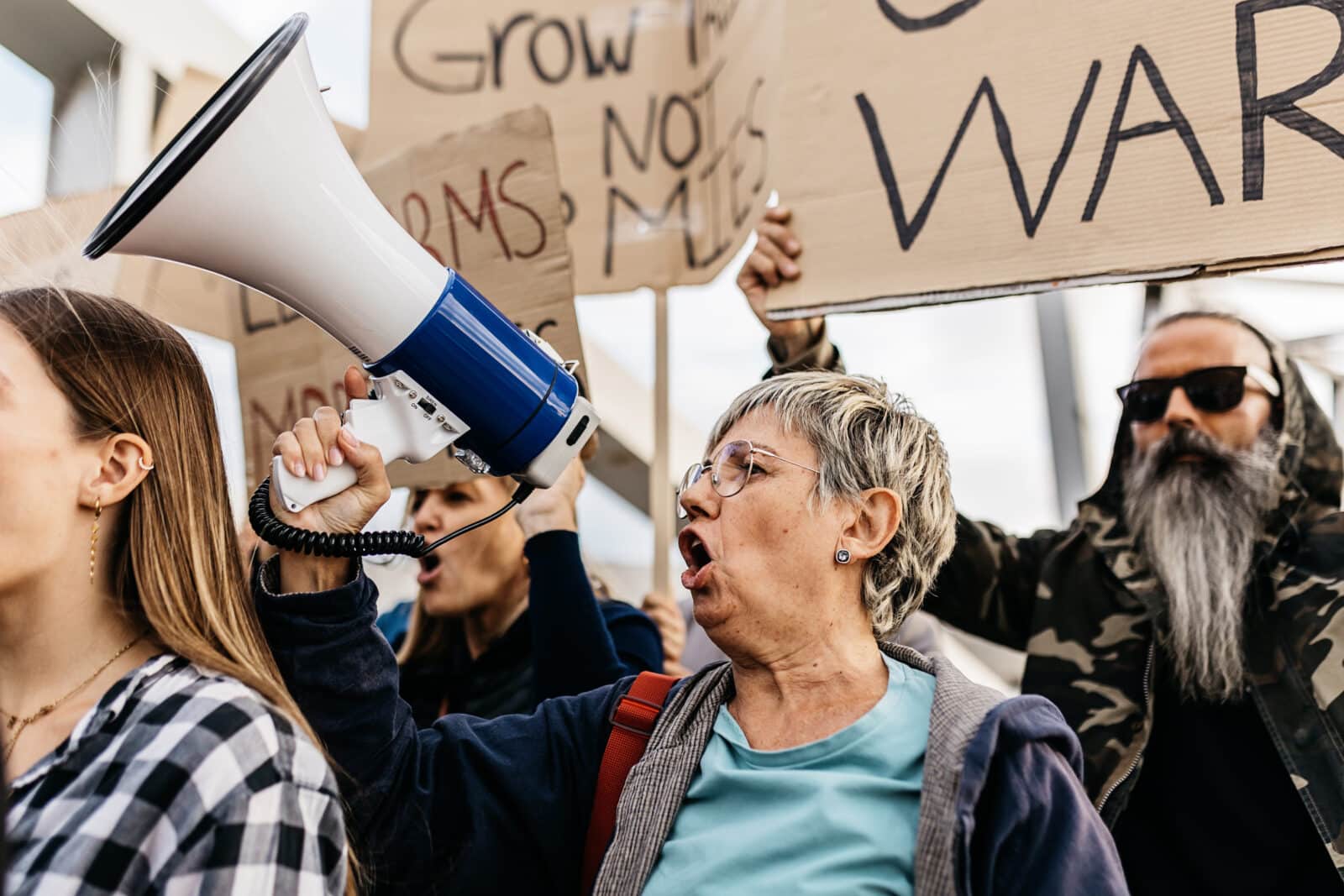
And yet, as I implied earlier, what we also learned is that the mainstream homelessness movement is not populated only by dull bureaucrats and, yes, some serious grifters, but also by extremists who are using this field of government and private aid to tie into other movements. We started seeing, for example, that some of the very same people who showed up to protest law enforcement at homeless camps were also in rallies on campuses to “divest” from Israel, to demand climate change programs, or to defund the police.
That was only anecdotal evidence, of course, so last spring we went to the Capital Research Center (CRC) in Washington, D.C., where a fine report had just been issued on the links between radical Islamists and campus demonstrations on Gaza. We explained what we were seeing and asked the CRC head, Scott Walter, if his group could chart the way that the homelessness services programs were being reshaped as a united base for far-left advocacy on a whole range of issues.
The CRC agreed and the report, with our cooperation, will be coming out very shortly. It is authoritative and original. Stay tuned!
If the reaction is what we hope, there will be fresh reform interest in government — which is responsible for how taxpayer money is spent, after all — and even from some of the more sober foundations.