Seattle Workers Offer Homeless Woman Mold-Infested Tiny Home
View at YouTube- Categories
- Governance
- Homelessness
- Street Report
Seattle Mayor Katie Wilson bragged about delaying an encampment sweep so she could place several homeless people into shelter and housing, implying this would be a new way of getting people off the streets.
“There I talked with a woman who was five months sober,” Mayor Wilson said at her State of the City Address, “and had three small dogs. We were able to identify a spot for her in a tiny house village.”
But after Wilson’s State of the City Address last week, We Heart Seattle’s Andrea Suarez did a simple follow-up to see if that woman with three dogs actually made it off the streets.
“People don’t always accept the services they’re referred to,” Suarez explained.
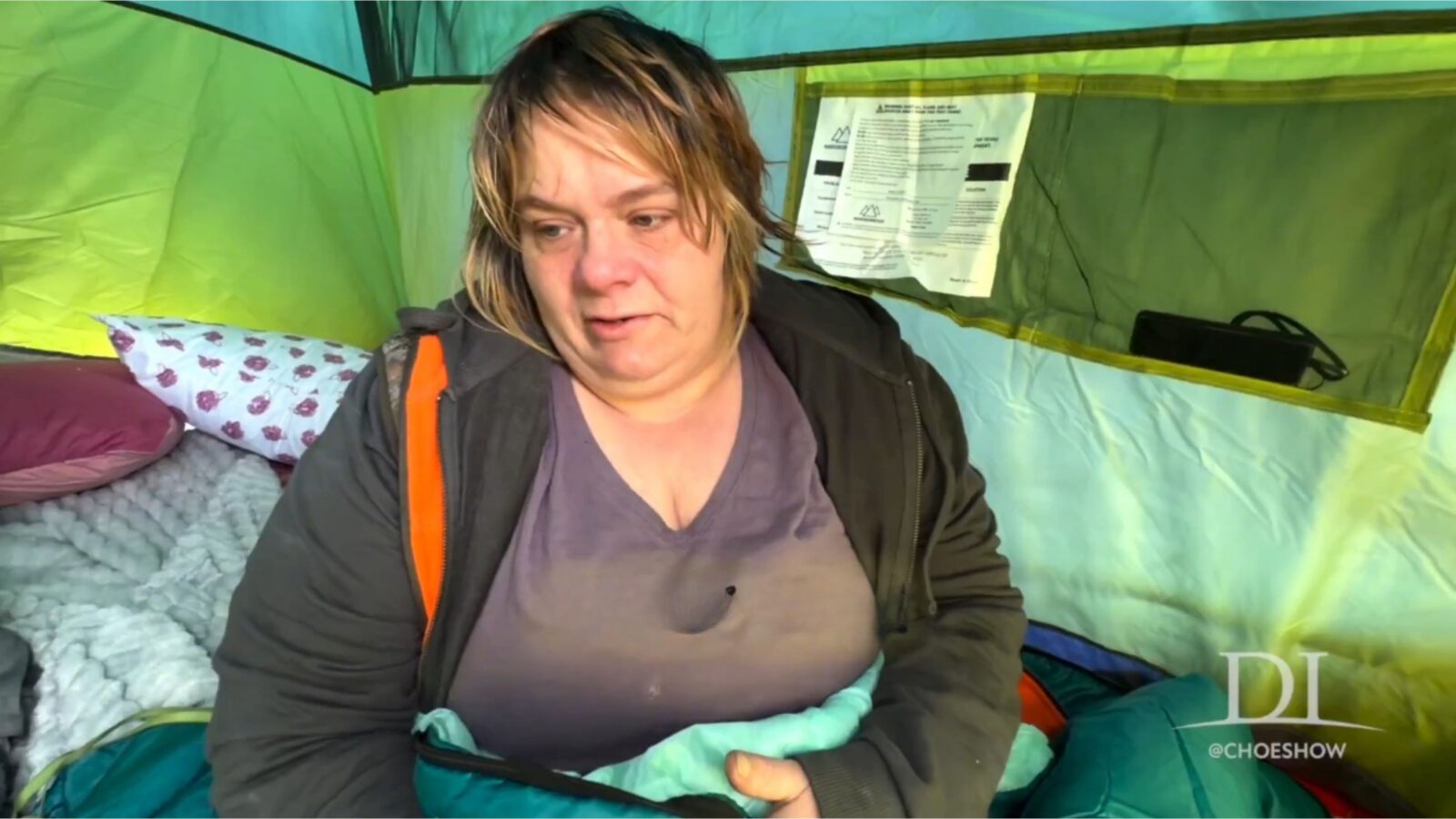
Surrounded by drug paraphernalia and a sense of despair, Crystal Rawlings and her dogs are still living in a Ballard tent encampment.
“Like, I’m not, like I said, I’m not gonna be ungrateful for anything,” she told me.
She spoke to me exclusively and says the city offered her a tiny house in Interbay Village.
“I just thought that something big in the works was bigger than a tiny home,” she said.
It’s run by the Low Income Housing Institute (LIHI), one of the many non-profits contracted by the city for homeless services.
However, Rawlings claims unit 71 was infested with dangerous black mold, that can cause serious health risks like severe allergies and breathing problems.
“I’m not gonna have them breathing in that mold,” Rawlings explained. “I don’t understand why they let anyone move into it cause it’s like, just look, you’ll see.”
I personally visited this tiny house to verify her claims.
“Not only that, it’s filthy. It’s disgusting,” she said.
While I was unable to get inside the unit, I did see what appeared to be mold spores growing on the window frame.
Rawlings explained she wanted Mayor Wilson to “come out here and deal with us personally.”
“I thought she did that, though, already,” I inquired.
“No,” Rawlings said. “She just came out here and had conversation just like me and you.”
Rawlings says the city and LIHI did not offer her any alternatives.
“You want her to watch the whole process?” I asked.
“Yes,” Rawlings told me. “Because if she would have done that, then she would know what’s working and what’s not working for us.”
At the State of the City Address, Mayor Wilson also bragged that their team “helped five more people living at that encampment.”
And when Rawlings saw the mayor taking a victory lap on stage, she says she was absolutely incensed, feeling used and betrayed.
“Why did you use me as an example, and that’s not an example?” Rawlings asked. “The city does that all the time. Whenever there’s a tiny home available they give it to one of us.”
“In fairness to the mayor,” I tried, “she did offer you a place to go.”
“It’s a big difference between being housed and then being in a shelter,” Rawlings told me.
In other words, Rawlings claims she was promised a fully furnished apartment, not a wooden shack.
“We cannot just keep moving people from place to place,” Mayor Wilson said in her State of the City Address.
I reached out to Mayor Wilson’s office and LIHI for comment, but so far no response.
Outreach worker Bruce Drager advised Mayor Wilson on delaying that Ballard encampment sweep and remains a supporter.
“It was an overwhelming success. It turns out in this one case that there was this problem with Crystal,” Drager said. “I’m very optimistic of what she can do.”
But Drager says her administration must now audit and reassess the effectiveness of all the homelessness agencies working with the city so this doesn’t happen again, which includes the city’s own outreach team.
“We don’t have any standardized criteria by which these shelters have to meet,” he explained. “We need to measure how many people are going into permanent housing.”
“Mayor Wilson did not address the service resistant,” Suarez said, “the population of drug addicts on the street that will resist shelter or tiny houses.”
For now, Suarez is keeping tabs on this complicated situation, trying to help Rawlings and her dogs stabilize before taking that next step.
“So she’s off opioids?” I asked Suarez.
“She’s off opioids,” Suarez confirmed.
“But she’s using other drugs.”
“She’s using other drugs.”