Fix Homelessness How to rebuild human lives
Category

Homelessness

urban-homeless-encampment-with-a-dilapidated-blue-tent-surro-806912533-stockpack-adobestock
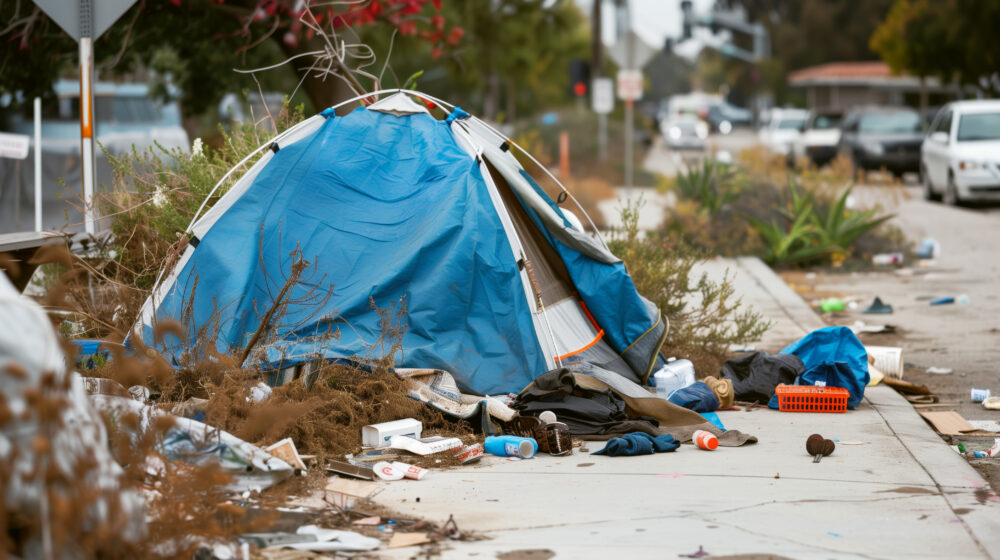
Urban homeless encampment with a dilapidated blue tent surrounded by trash on a sidewalk.
Image Credit: OMD - Adobe Stock

Discovery Institute Applauds President Trump’s Bold Action on Homelessness

The scholars and Fellows of Discovery Institute’s innovative Fix Homelessness initiative applaud President Trump for signing Executive Order, “ENDING CRIME AND DISORDER ON AMERICA’S STREETS,” a decisive step toward dramatically reducing homelessness across the United States. As the nation’s leading think tank on homelessness policy, our organization has long called for the very action this Executive Order takes: rolling back the federal government’s failed, one-size-fits-all “Housing First” mandate. Despite President Obama’s 2013 pledge to end homelessness within a decade, the policy has led to a 34% increase in homelessness. The Biden Administration’s most recent Annual Homeless Assessment Report (December 2024) shows that unsheltered, street-level homelessness is growing at a rate that would double the crisis every five to six years Read More ›

NewsomApril2024WikimediaCommons
Public Domain image at Wikimedia Commons: https://commons.wikimedia.org/wiki/File:Newsom_April_2024.jpg

Gov. Newsom’s Broken Promise on Homelessness

Standing on an Oakland street flanked by legislative allies, California Gov. Gavin Newsom made a sweeping promise in 2021: California would eliminate family homelessness within five years. Backed by an unprecedented $75 billion budget surplus and $27 billion in federal stimulus, his administration committed $12 billion to the crisis, including $3.5 billion for housing units and rental subsidies. His strategy? Double down on Housing First—a one-size-fits-all policy California adopted in 2016 after the federal government’s 2013 embrace of it. Housing First promises permanent, taxpayer-funded housing with no expectations—no sobriety, no treatment, no work, ever. Somehow, the governor missed the glaring reality that under Housing First, homelessness in California exploded by 34%, and unsheltered homelessness by 47% between 2017-2021. Fast forward Read More ›

Rochelle-DESC-resident

Former Seattle Supportive Housing Resident Tells All

Out of Sight, Out of Mind The Trump administration is in the process of defunding “permanent supportive housing” for homeless drug addicts across the nation. That’s because data shows these “low barrier” tax funded facilities just warehouse individuals and invite more crime into neighborhoods. In some instances, case workers irresponsibly place addicts on the same floor with drug dealers. Listen to this former Downtown Emergency Service Center (DESC) resident describe what’s really happening inside.

Seattle-DESC-encampment

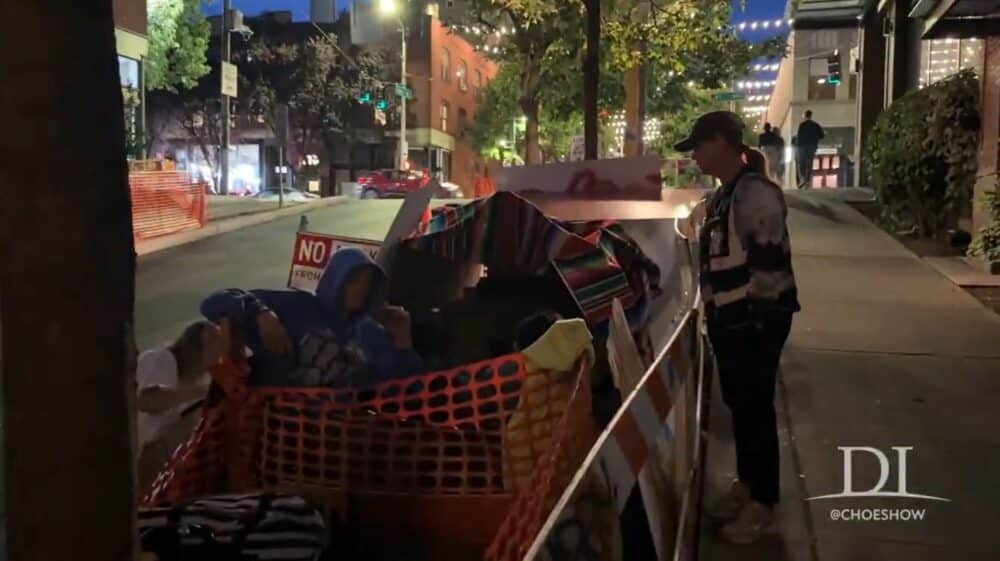
Homeless Encampment Pops Up Outside Seattle Supportive Housing

Revolving Door Even after aggressive sweeps, most of the drug encampments are back in Seattle’s Beacon Hill neighborhood. The game of Whack-a-mole continues as Mayor Bruce Harrell struggles to find long-term solutions to address this street crisis. Ironically, the latest hot mess is right outside the notorious Downtown Emergency Service Center Hobson Place building for homeless drug addicts. This taxpayer funded blight on the community is a leader in 911 call volume and no one is required to go into drug addiction treatment programs. It’s just another DESC revolving door of crime and chaos in the city.

Marvin-Olasky-by-Scott-Huck-2010-scaled

Marvin Olasky on the Humanity of Homeless Persons

[The following is a podcast episode originally published April 28, 2025, at Humanize, a podcast hosted by Wesley J. Smith at Discovery Institute’s Center on Human Exceptionalism.] Homelessness has become a crisis in the United States. We live in the richest country in the world, and yet one can drive down main thoroughfares of our most prosperous cities and be confronted with tent encampments lining streets, squalor, open-air drug markets, and destitute people begging. The crisis is multifaceted as it is seemingly intractable. What is the role of mental illness? What about drug addiction? Is the rising cost of housing part of the problem, and if so, what can be done about it? What protections does society owe these vulnerable Read More ›

homeless-man-wearing-a-sleeping-bag-stockpack-adobe-stock-720925562-stockpack-adobestock
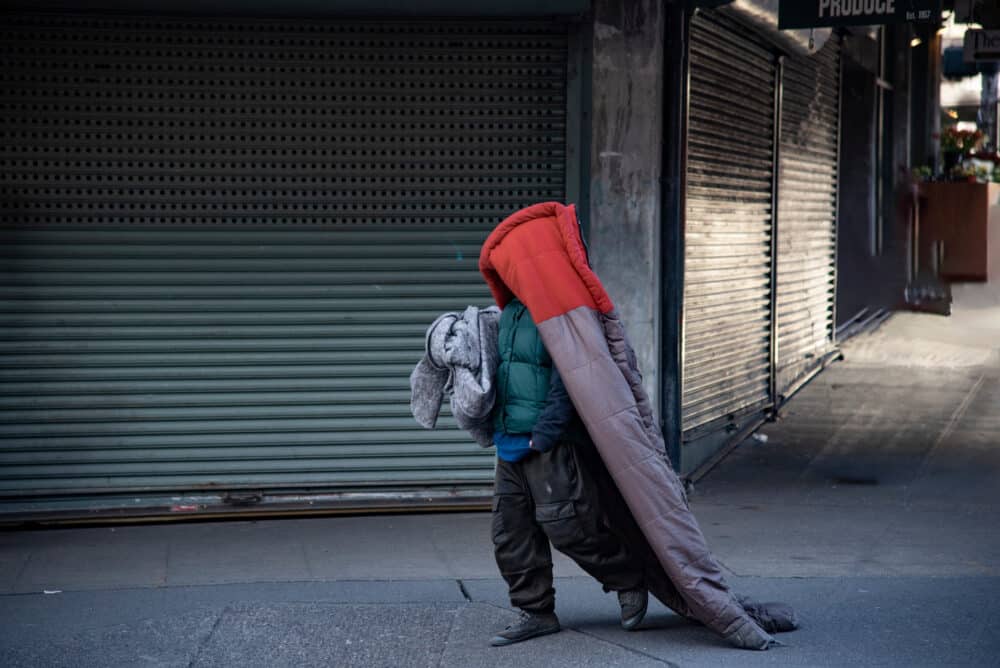
Homeless Man Wearing a Sleeping Bag
Image Credit: Ryan - Adobe Stock

Reforms to Involuntary Commitment Law Can Save Lives

[Editor’s Note: This article was amended on July 23, 2025, to include information about Ricky’s Law.] In its 2026 state budget, New York is putting a concerted effort behind addressing severe mental illness by expanding its involuntary hospitalization law and increasing the number of psychiatric beds. Kendra’s Law, which allows the involuntary hospitalization of those with a mental illness who pose a threat to themselves or others, will now also allow the hospitalization of those who are unable to care for themselves because of their mental illness. Washington state would do well to follow New York’s example. In Washington state, involuntary hospitalizations are handled by designated crisis responders (DCRs) under the state’s Involuntary Treatment Act. DCRs determine whether the individual Read More ›

Bruce-Harrell-video

Mayor Bruce Harrell Answers Questions About Homelessness Amid Re-Election Campaign

What Does Harrell Plan To Do? Nearly four years ago, Seattle Mayor Bruce Harrell campaigned on the promise of making a serious dent in the city’s homeless drug crisis. But under his watch, there are more people living on the streets, the fentanyl epidemic remains out of control, and many encampments that were cleared are now repopulating. So this evening, I asked him what he plans to do about this ongoing issue that could become a political liability for his re-election campaign. Using the Wrong Measuring Stick Mayor Harrell is touting these accomplishments on his campaign website. But critics say citing a decrease in RV’s and tent encampments as a metric for success is the wrong barometer. Homelessness on the Read More ›

frostbite-fingers

Homeless Woman Suffering from Frostbite Ignored on Seattle Street

Where Are City Workers? Hundreds of people are walking past a homeless woman in downtown Seattle suffering from frostbite. She’s missing fingers and toes. We Heart Seattle’s Andrea Suarez is the only outreach worker who’s stopping to help. Where are the city funded workers?

Andrea-Suarez-speaking-with-homeless-Belltown

Seattle’s Belltown Neighborhood Overrun by Homelessness and Addiction

Social Services Row Crime, chaos, and death sums up what’s happening in Seattle’s Belltown neighborhood. The cross streets near social service providers like Plymouth Housing and REACH continue to be the root of all drug-related problems. They are both notorious pushers of the failed “harm reduction” and Housing First policies that have led to even higher rates of homelessness and drug overdose deaths in the region. Making matters worse, the Stay Out of Drug Areas (SODA) ordinance has been a total flop since it’s barely being enforced.

Seattle-homeless-woman-on-street

We Heart Seattle Attempts to Assist Woman Undressing on Seattle Sidewalk

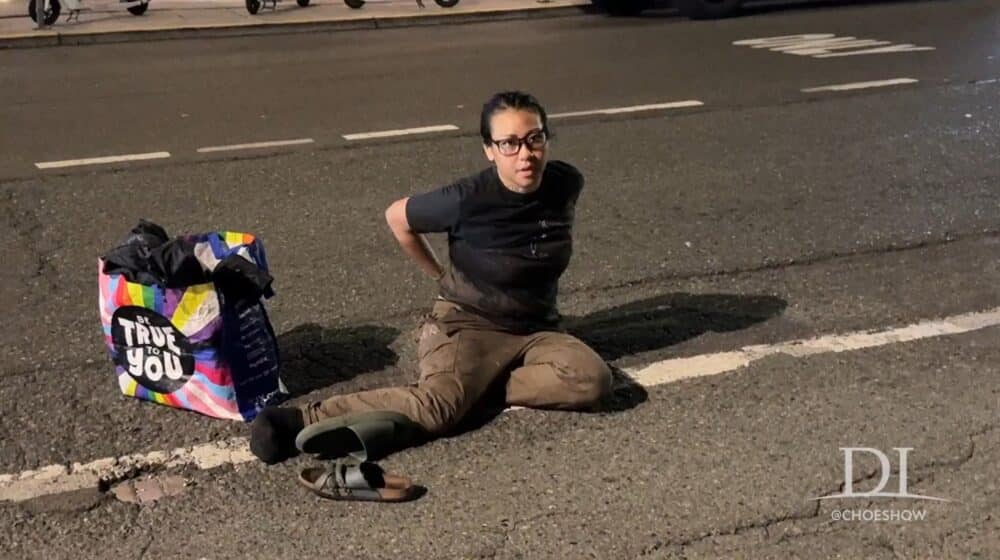
Lost to Drugs The street crisis in Seattle’s Belltown neighborhood is being fueled by drugs and mental illness. Some of the city funded non-profits like REACH and Plymouth Housing also have a presence in this neighborhood. Critics say their clients are the ones running wild on the streets and causing most of the problems. Late Tuesday evening, Andrea Suarez of We Heart Seattle tried to help a woman undressing on the sidewalk. But she was lost in her drug-induced mania.