A Street-Level Interview with Portland’s Mayor on Shelter and Safety
- Categories
- Governance
- Homelessness
- Street Report
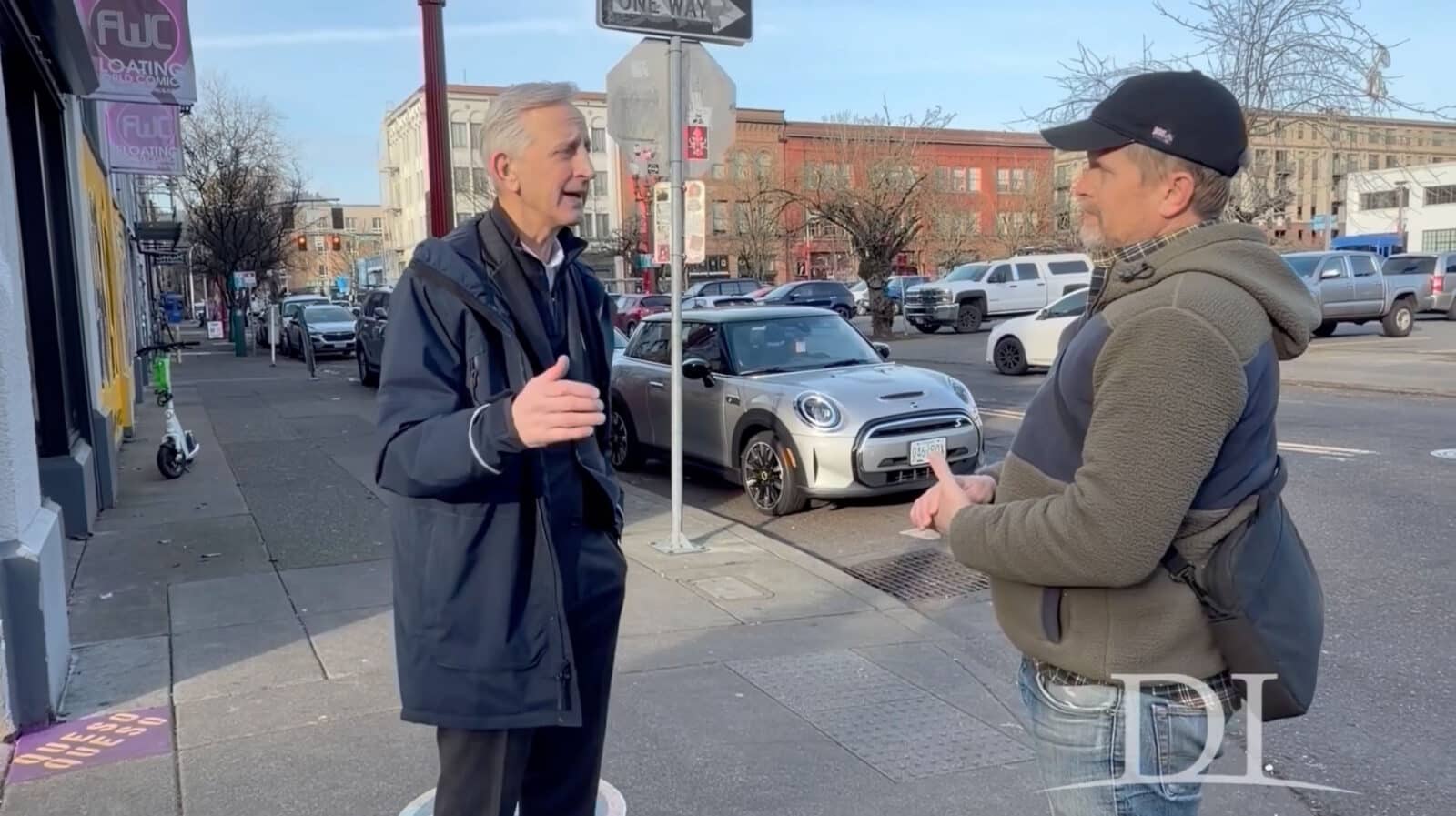
I interviewed Portland Mayor Keith Wilson on the streets of Portland about the state of the city and its response to homelessness.
I asked whether his administration requires measurable outcomes from the homeless service providers it funds. In response, Mayor Wilson pointed to his new policy of ending the distribution of tents, arguing that tents do not help people exit homelessness and are not life-saving care. He cited the heightened danger faced by vulnerable women living outside, noting that women experiencing homelessness face roughly a 40% chance of being assaulted.
I followed up by asking whether there are consequences for providers who fail to meet expectations or move people off the streets. Mayor Wilson said the providers are aligned with his vision and are doing good work.
I then asked about the two predominant explanations for homelessness: whether it is primarily an affordable housing crisis or an addiction crisis, and which he believes is the main driver. When pressed, Mayor Wilson said it was not his role as mayor to choose sides, explaining that his primary responsibility is public safety.
One of Mayor Wilson’s campaign promises was to add a significant number of shelter beds during his first year in office. He stated that this promise has been fulfilled, with more than 1,500 shelter beds added.
Finally, I asked if he had advice for Seattle Mayor Katie Wilson. Mayor Wilson expressed support for her plan to add 4,000 shelter beds, advising her to create a clear plan, stick to it, and wishing her success.
Mayor Wilson’s answers reveal a clear governing philosophy, but they also highlight the unresolved tension at the center of Portland’s homelessness response.
The decision to stop handing out tents marks a shift away from managing life on the streets and toward pushing people indoors. Wilson framed the policy as a matter of safety, particularly for women. That statistic alone underscores what outreach workers and unhoused women have long said: the street is not neutral ground, and tents do not equal protection.
Where the conversation became less clear was accountability. When asked what happens if providers fail to move people off the streets, the answer was alignment — not consequences. Shared vision and good intentions were emphasized, but measurable benchmarks, audits, or penalties were not. For a city that has spent billions of dollars on homelessness over the past decade, this remains a critical unanswered question: who is responsible when outcomes don’t improve?
Wilson’s refusal to take a position on whether homelessness is driven primarily by housing costs or addiction appears deliberate. By framing his role narrowly around public safety, he avoids entering a polarized debate. While that posture may offer political flexibility, it also sidesteps the reality visible on Portland’s streets every day — many people living outside are struggling with severe addiction, untreated mental illness, or both, and shelter alone may not resolve those issues.
The addition of more than 1,500 shelter beds in his first year is a tangible accomplishment and gives the city greater leverage to argue that alternatives to street camping exist. The question now is what those beds actually lead to: stabilization, treatment, permanent housing, or continued cycling through temporary systems.
Wilson’s advice to Seattle’s new mayor was simple: make a plan and stick to it. Portland now sits at the point where its own plan must be judged not by capacity added, but by outcomes delivered, fewer people sleeping outside, fewer overdoses, fewer assaults, and fewer lives stalled in a system that has long promised help but rarely demanded results.